Postings

Saturday, 9 June 2012

Ons unieke Kleurlingtaal


Ons unieke Kleurlingtaal

                                                                                                                              Stes de Necker


Sekerlik een van ons kosbaarste erfenisse is die unieke taal van die bruin gemeenskap in Suid-Afrika.
Nêrens ter wêreld kan jy hierdie taal, wat so deurspek is met die mooiste uitdrukkings wat daar kan bestaan, hoor nie.

Ongelukkig is dit vandag egter mode om agter die sogenaamde gekultiveerde moderne samelewing aan te hardloop, dat ons die ernstige gevaar loop dat ons eie “capey” taal vir altyd verlore kan gaan. En wat 'n jammerte sal dit nie wees nie!

Vroeër jare het ek altyd spesiaal voorsiening gemaak om, elke keer wanneer ek die Kaap moes besoek, 'n draai op Kommetjie en Houtbaai te maak, net om te luister na ons mense se kleurvolle uitdrukkings.
So gebeur dit toe eenkeer dat ek op die Houtbaaise hawe in my gehuurde Avis motortjie sit net toe daar 'n “bakkie” vol vis gelaai, kaai toe aankom.

Die vangs was netjies in bondeltjies van ses of meer vissies vasgemaak en op die bakkie staan die visserman met 'n bondeltjie in elke hand, besig om die varsheid en kwaliteit van elke bondeltjie vis te besing.

Op die kaai staan daar 'n bejaarde ou dame en skreeu vir die visserman: “Hoevieel soek djy”! Maar die visserman ignoreer haar botweg.

Sy skreeu weer vir hom: “Wat vra djy vi jou vissies?”, maar weereens antwoord die verkoper haar nie.
Nadat sy hom die vierde keer vra en hy steeds nie met haar wil praat nie, sê sy vir hom: “Moenie nou su wiesie! Ik koepie vir die trade nie; IK koep vi my family! Sê nou wat djy vra!”

Hierdie keer reageer die visserman op haar geskree en skreeu vir haar terug: “Djy wiet hoekom Ik ie vir djou will sê wat dit kossie. Djy stry altyd oor die prys!”

Die visserman het toe seker maar kop gegee en daar van onder in die bakkie langs die kaai skreeu hy vir haar terug: “Twinnig rand 'n bossie!’

Die ou tannie laat nie op haar wag nie en snou hom toe: “Ma djy’s seka mal in djou kop! Djy wiet dat ik it altyd by die anne manne koep vi tien rand”!

                                                                     ==========

By 'n ander geleentheid was Janelle saam met my en sy moes vinnig by Foshini inspring om iets koop, toe ek maar besluit om my op een van die stoele in die skoene afdeling solank tuis te maak.
Die skoen afdeling was van die res van die vloer geskei deur een van daardie “wrought iron” afskortings wat met plastiek blomme versier was. Nie lank of twee van die winkelassistente kom staan net agter my aan die oorkant van die afskorting, toe die een die ander vra: “Het daai vrou toe die langbroek aangepas?”
“Dja” sê die ander een. “En hoe lyk hy?”
“Nay” sê die een, “hy lyk te bakgat! Maar nou gaan sta en buk die blerrie vrou so vooroer dat die blerrie ding tot hie boë in haar hol optrek!”

                                                                   =============
By nog 'n geleentheid sit ek eendag by Kommetjie in 'n motor en luister na die gesprekke, toe daar so 'n jong klong met 'n 50cc motorfietsie daar opdaag.
Heel gou toe drom daar so 'n stuk of ses van sy makkers om die motorfietsie saam om hierdie nuwigheid te bewonder.
Die een vryf oor die saal, 'n ander vryf so oor die modderskerm, maar een van die makkers wil so oor die uitlaatstelsel (manifold) vryf toe dit hom brand dat jy eintlik die ssst kan hoor!
Hy spring met een sprong seker 'n goeie vier tree terug en toe hy grondvat skree hy vir die motorfietsie: “Hiert djou fokkin electric moer!”

                                                                    ============
Eendag ry ons op pad lughawe toe, toe die bestuurde besluit hy ken 'n korter pad. Die pad is toe nie veel meer as 'n eenrigting stegie wat ook net een motorwydte kan akkommodeer.
Met die indraaislag in die straatjie in, kom daar toevallig 'n vis aflewerings voertuig van die teenoorgestelde kant van die stegie, besig om in hierdie nou straatjie, teen die verkeer in, op te tru.
Die afleweraar verduidelik dat hulle agter is met hulle aflewerings en dat hulle nie lank sal wees nie. Moet glo net een krat vis by die betrokke winkel aflaai.
Gelukkig het ek tyd ophande gehad en sê vir die motorbestuurder ons kan maar wag totdat hulle klaar afgelaai het.
Toe die afleweraars die trok se agterdeur oopmaak, het een van die kratte vis seker omgeval en jy sien net hard gevriesde vis spat oor die straat in alle rigtings. 
Een van die die hard gevriesde visse gly onder die aflewerings trok deur en kry koers die straat af wat teen n redelike helling gelee was.     
“Oee my liewe Heerietjie” roep die een van die afleweraars, “kyk net hoe sail soe 'n sjeelbek trug sea toe!”


                                                                   ===============

Ek en Mann Oelrich moes by geleentheid die Landbou Navorsings Raad op Stellenbosch besoek. Na verskeie mislukte pogings om by die Raad se kantore uit te kom, besluit ons maar om by iemand wat darem min of meer lyk of hy die omgewing ken, pad te vra.
Die kêrel begroet ons met 'n joviale “Jis jis master!” Dit lyk kompleet of hy met 'n houtspaan op die bek geslaan is met sy ontbrekende vier voortande.
Ons vra hom of hy weet waar die LNR se kantore is.
“Siekelik master! Die maste hou net straight aan met dié straat tot by die dêrre robot en daarg dgraai maste slap links. Dan is maaste nou sterk op pad ARC toe. By die twiede robot moet maaste net so effens regs gaan, dan sit die offices soe oppie oogkantste corner.”
Ek maak toe die fout om vir hom te sê, “Dankie ou bul, ek waardeer dit”. Dadelik vra hy my, “Kom die mastes van die Vgrystaat af?”  Ek sê toe maar ja, hoe het hy geweet.
“Maste! ... dis net 'n Vgrystaater wat vgir 'n Stormer sal sê hys 'n Bull!”
Genadiglik het ek hom nie ‘ou bul’ genoem met die groetslag nie, anders sou hy ons sekerlik die pad terug Bloemfontein toe verduidelik het!

                                                                    ========


My ou vriend Hennie vertel my hulle was met vakansie in die Kaap, toe hy in Belville ook moes rigting vra vir die pad Strand toe.
Die Bruinman verduidelik toe ook hoe hy by die volgende verkeerslig moet regs draai, met dié straat moet aanhou tot by 'n spoorweg kruising en dan ná die kruising, weer regs moes draai. Toe die ou op daardie punt kom toe sê hy:
“Seur moet nou moei luiste, wanneer seur klaar regs gedraai het, dan ry die seur tot by die laagwater bruggie. Annerkant die bruggie sal seur 'n fourway stop kgy. Daar draai die seur links en ry tot by die T-junction.”
Hennie vertel, die ou staan so 'n oomblik en peins oor wat hy nou net gesê het en toe sê hy, “Oo my gottatjie seur, as die seur by daagie T-junction kom dan moet die seur wiet djys nou in djou moer in verdwaal!”
Toe begin hy maar weer van vooraf verduidelik!

                                                                           =========
 
Ek dwaal eenkeer tussen die stalletjies op Groentemark Plein, toe die een Kleurling man by ʼn ander een verbyloop. So in die verbyloop vra die een vir die ander een, “Kan djy my altemit sê hoe laat dit is?” 
“Dja” sê die ander ou, “ek kan
“O thanks man” sê die eerste ou en loop verder!

                                                                            =========
Wanneer ek in Kaapstad was het ek gewoonlik by die Dorpshuis tuisgegaan.
Destyds het daar 'n kelner in die hotel gewerk wat verseker nie op sy bek geval was nie.
Een aand bestel ek vis vir aandete by die betrokke kelner. Toe hy die dis vir my bring, merk ek terloops op dat die vis darem seker varser is as dit wat ons in die Vrystaat kry.
“Heege master! Dis net soos die maaster daar sê, inigiets varser as daagie vissie sou mos nog galeef het!”

                                                                            =========


Hallo antie Hannie,

Lanklaas van antie gehoor. Net baie donkerte hier by ons op Paterson as gevolg van een of ander moerg wat moeligheid gemaak het by Koe..Koe…, ag daar innie Kaap se Yskor.

Ons se huis lyk party aande soos 'n disco so kort opmekaar gaan die krag af en aan. My pa het toe besluit genoeg is genoeg. Net voor Krismis het pa besluit lat hy wil oplaas 'n generator koep, oorlat hy moeg was virrie krag onderbrekings. My oupa het al gedink dis omdat my pa party maande die Munispaliteit se geld innie borrelstoor belê.

My pa sê hy's gatvol, dit maak nie saak nie, of dit nou daai simpel mannetjie vannie Cownsil is wat sy krag afsny, of daai simpel mannetjie van Eskom, hy worrie nie, hy wil 'n generator hê. Nou ja, toe gat ons winkels toe om die ding te koep.

Oppie kaart want my Pa sê my ma se kaart is baie lekker, jy koep net op Budget se rikening. As jy koep en jy vertel die mense om dit op Budget se rekening te sit, da doen hulle dit sommer. Ek weet nie lekker wie Budget issie, maar ek wiet my pa sit alles op Budget se rikening. Ek reken die Budget gat darem lekker moerig wees as hy uitvinne wat my pa alles op sy rekening koop. Hoe gaan hulle ooit wiet... wil pa weet.

In elk geval ons loep koop toe die generator ding, en dis mooi daar waarg die moeilikheid begin. Kyk, as julle dink my pa weet niks van kamp af nie, of van karre af nie, of van vroumense af nie, dit is tog goed wat 'n mens met djou oee kan sien, dan moet julle weet, hy weet éérs niks van lektriek af,.... dis wat my ouma altyd sê. Maar my pa worrie nie, toe hy eers na 'n hele paragraaf vreemde woorde daai generatortjie gestart kry, toe dink hy lat hy 'n elektriese engeneer is. Dis glo slim ouens wat krag vergstaan, sê hy.

Toe is my pa slim genoeg om te weet, solank daai generatortjie loep, solank maak hy krag, maar as hy stop, dan is hy net 'n stuk blik, met 'n fancy Japanese name. So, voor my pa die ding aan die krag loop koenek, toe swiets hy eers die generatortjie af, en hy se vir my " Jannie, as 'n ou met krag werk, dan moet djy slim wees, en nugter"... nou val dit my by...my pa is nie een vannie twee nie, so toe weet ek .... hie kom groot stront.

Maar ek het verniet geworrie, toe my pa daai drade vat, en hy shok nie, toe weet ek hy weet waarvan hy praat. Toe maak hy die drade mooi skoon solat die koper uitsteek en hy is toe reg om die masjientjie aan die kragpunt te konnek. Nou ja, toe sit ek lekker en kyk hoe my slim pa die kragonderbreking ding onner die knieg kry, en ek worrie niks nie, oorlat ek kan sien my pa ken.

Toe maak my pa daai swietsbord innie kombuis oop, en hy maak reg om sy generatortjie se drade aan die swietsbord se drade te koenek. Dis glo soe lat as die krag afgaan, dan start my pa net sy generatortjie en dié se krag sal die swietsbord maak werk. Daar is 'n gesegde wat die grootmense gebruik, hulle sê dat as die pawpaw die fan strike, dan is daar groot  moeilikheid. Daai ooms wat so sê,.. het nog nie gesien wat gebeur as die swietsbord se krag my pa tref nie.

Kyk antie, toe my pa so oppie leertjie staan en hy konnek daai generatortjie se krag draad so aan die swietsbord se rooi draad, toe smaak dit vir my my pa is aan die hartaanval kry of hy kry 'n senuweeinstorting of 'n eleptiese aanval of 'n stroke offe ding, so beskyt hy hom. Die way wat my pa daai swietsbord ruk en pluk, met die briek-dance en alles, dog ek my pa gat die ding uit die muur uit ruk en net 'n gat daar los innie muur daar waar die swietsbordtjie was.

Met die smile op sy gesig van die ge-shock lyk dit nogal of hy dit geniet. My pa spog mos hoeka hy kon jongtyd deurnagdisko sonner ophou. Hy ruk daai swietsboks of hy aan't wen is op 'n pinball-masjien! Nou ja.. die swietsbordtjie moef nie, en my pa hou nie op rukie, en hy jodel soos Charles Jacoby dit sou gelaaik het.

Ek dog dis van woede wat my pa so skreeu oorlat hy nou begin kwaad word virrie swietsbordtjie. Hy dans so oppie leer dat die een na die ander boutjie  uit die leer pop vannie skud ... en hy gooi sy dikkerige lyfie rond boop daai leer asof hy nou inne briekdans kompetisie deelneem, of 'n voordanser by die 20 -20 krieket is. Net toe ek vir my pa wil waarsku lat hy vannie lier gaan afval, toe gebeur dit al klaar, .... hy val van daai leer af, maar hy val nie grond toe soos 'n mens moet nie. Toe verstaan ek hoekom party mense sê " hy't daar afgemoer" want.. daai wassie 'n val nie, daai was 'n moerse harre slag!

In elk geval, kyk my pa val toe lat dit vi my lyk asof hy geskiet is, maar sy lyf gee nog so 'n paar rukke met die wat hy so deur die lug trek, nes daai ouens op TV wat by die olimpiese spiele innie swembad induik en dan sulke langarm S-draaie innie lug maak. Al verskil is nou dat daar nie water onner is nie - net die kombuisvloer met die tapyt wat golwe maak soos hy neerval.

Sy splinternuwe boe-tanne sit om die tafelblad vasgebyt, sonner lat my pa by hulle is. Toe dit vir my lyk dat my pa sy kop helemal gaan misval en op sy gat te lande gaan kom, toe skrik ek want ek vrees toe vir harsing-skudding, want my ma sê altyd my pa se verstand sit in sy hol en dat hy 'n harde kop en 'n lamsak is. Nou gaan my arme pa sy agterent verder lam val.

Maar toe is dit te laat, hy val dat die droogtestof in 'n wolk tussen die vloerplanke uitspring en my pa met sy asma lyf in die stofwolk sit en hoes. Maar toe is dit nogie kla nie. Daar sit my pa en jaaif, toe voel ek darem oek beter oorlat ek kan sien hy is nie heeltemal 'n lamsak nie. Hy wikkel sy boude soe lekke daar oppie grond en jodel..met die een kant van die kragdraad steeds in sy hand soos 'n getrynde sanger met 'n mike. Skielik dink ek weer aan Charles Jacobie.
Maar my pa weet van ..want so tussendeur trek hy nog vir my gesigte ok, en spoeg sy ondertande met een boog tot binne in die wasbak..

Wat 'n performance antie... ek kon wrgagtag nie anders as om vir Pa hande te klapie.

Groetnis,
Kleinboet
                                                              =========

The fruit seller walks up to the car and says:
"Peske, Peske. Lekke peskes. Net vyf rand virrie laanie."
The guy in the car says: "Is hulle soet?"
The fruit seller says: "Dja menee, kyk hoe stil sit hulle!!"

                                                              ==========

The guy selling snoek on the corner shouts:
"Hiers djou snoek"
The guy in the car says:
"Wat vra julle vir daai snoek?"
The guy replies:
"Ons vra hulle niks, wil djy hulle iets vra?"

                                                             ===========

Gatiep sit in sy garage waar hy die laaste goed moet ontruim en bepeins sy lot.
Hy't sy huis verloor, sy werk verloor en sy vrou het die kinders gevat en hom geskei.
Hy sien 'n kas met wynbottels en loop soontoe.
Hy vat 'n leë bottel, smyt dit teen die muur en skel: 'Djy issie reason lat ekkie 'n vrou hettie!'
Hy vat 'n tweede bottel: 'Djy issie reason lat ekkie kinners hettie!'
Derde bottel: 'Djy issie reason lat ekkie 'n job hettie!'
Vierde bottel: 'Djy issie reason lat ekkie ' n huis hettie!'
Hy vat die vyfde bottel en sien dis nog nie oopgemaak nie - vol wyn.
Hy sit die bottel saggies neer en sê: 'Staan djy eers eenkant toe, my broe. Ek sien djy wassie involved nie!'

                                                                 ============

Gatiep en Maraai sit innie bus in Cape Town toe die lady opklim "with a face made up to kill" ek sê: bloed roei lips, "seven layers of base" en silke "massive eyelashes" lat sy nie ees haar oe kan oep maakie.
Daars nie oep seats, so sy skeem sy hang maar aan die leather strap.
"Hei Gammat," se Gatiep, "kom offer djy nie die lady 'n seat nie?"
"Nei," skeem Gammat,"a painting moet mos hang."

                                                                  ============

Meraai sê vir Gatiep : "Djy moenie dink djy sal by die Hiemel se hek ingan
as djou asem soe na drank ruikie."
Gatiep sê : "Meraai, dais 'n technical point van Hiemel toe gan wat djy nie van wietie. My asem ganie saamie ."


                                                                  ===========


IEK SÊ MA NÊT.

Ik iss affie Kap menier,
waa dênk djyt iek darrie prât gelier?
Djulle whaities wat soe lag virrie die klank va mei,
ka hie annerrghkant Maamesbughrrei oek ma alte lekke bghrrei!
En wat va djy mê djou Preetoorieaanse taaal -
en elke woerd met sy prêgnint vookaal?
                                                                                       MARIUS BUYS

                                                             ==========

Ons eie en enigste “capey” taal; moedertaal; gebore en getoë aan die Suidpunt van Afrika. 
'n Waardevolle juweel wat die moeite werd is om gekoester en bewaar te word.


Vind nog interessante artikels op my blog.
Kliek net   http://stesdeneckers.blogspot.com


Old Dogs


Old Dogs

                                                                                                                                    Stes de Necker


Ou Boel lê eendag onder sy geliefde boom daar in die Kalahri en kou aan ʼn paar ou bene wat daar rondgelê het, toe hy ʼn tier sien aankom. Wetende dat hy met al die jig in sy gewrigte en verkalking van sy rugwerwels nie vinnig genoeg daar gaan wegkom nie, bly hy maar lê en kyk ánderpad toe. Toe hy agterkom dat die tier binne hoorafstand is, toe sê hy hardop, sodat almal hom kan hoor: “Magtig, dit was nou een van die lekkerste tiere wat ek in 'n lang tyd geëet het!” Toe die tier dit hoor maak hy hom vinnig uit die voete.

Intussen het daar 'n aap bo in die boom gesit en heeltyd die affêre dopgehou. Die aap dink toe hier kan hy 'n paar punte by die tier score en hardloop die tier in en vertel hom wat nou eintlik daar gebeur het.
“So 'n ou donner! Klim op, vandag is die dag wat daardie ou hond vrekmaak!”

Ou Boel, wat die aap agter die tier sien aanhardloop het en alreeds besef wat die aap nou eintlik in die mou gevoer het, bly maar lê en toe hy agterkom dat die tier met die aap op sy rug weer binne hoorafstand is, toe sê hy weer hardop: “Nou waar bly daardie aap so lank weg. Ek het hom al tien minute gelede gestuur om vir my nóg 'n tier te gaan haal!”

The moral of the story: When push comes to shove, the wisdom of old age wil trump the arrogance of youth every time!  


Vind nog interessante artikels op my blog.
Kliek net   http://stesdeneckers.blogspot.com


Monday, 4 June 2012

Agriculture in Africa


The Agricultural Sector in South Africa and the rest of Africa


In need of serious assistance


                                                                                                                                  Stes de Necker


There is little space left in Africa for mediocre economic activities and peace meal handouts to satisfy the needs of the masses. South Africa is the most modern economy on the African continent and has already established itself as the gateway to the rest of Africa for most overseas business wishing to invest in Africa. In order to retain this position, South Africa needs to establish major reliable and economically viable business ventures with the rest of Africa.

Away from the resources and energy of the main agricultural producing areas of South Africa, polite political expressions of loyalty, poor service delivery and sheer incompetence seems to be the order of the day. Creative and effective participation in the global economy, by all farmers in the agricultural sector, requires an entirely different mindset – a mindset that dares to be less governmental, that challenges conventional development policies and foster competitive regional and global linkages.


With the best intentions in the world, present South African Government policies, mentorships, NGO’s and commodity organizations have at best only succeeded in the establishment of a few subsistence farming operations. These efforts are doomed to failure unless a long term remedy can be found to stop the continuous decline in economically viable agricultural production.

Nowhere in modern history has governments been able to conduct farming operations economically and sustainably within the confines of rigid governmental policies and statutory regulations. Communist Russia, Cuba and most recently Zimbabwe are prime examples of this incapacity. Numerous regimes in the rest of Africa have also failed to effectively produce food for their citizens.

Inadequate agricultural development policies coupled with constant rising input costs and the accompanying inability of many farmers to maximize revenue in the market place, have forced many farmers off their land. Further more the majority of Africa’s farmers, especially emerging and existing small to medium scale farmers, are unable to stay abreast of modern scientific methodology and technology due mainly to financial constrains and inadequate support structures.

Countries like Brazil, the Ukraine and China have largely converted to new generation fuel efficient tractors and farming equipment. Combined with modern production methods like for example scientific minimum tillage and water harvesting techniques, this change-over not only made it possible for many established farmers to survive the international economic pressures on agriculture, but also to increase their production and profitability. In South Africa the only successful farmers are those who are applying modern scientific methodologies and technologies in order to ensure their eventual success.

As a result of stable government and disciplined macro-economic policies, South Africa has managed to remain part of the international mainstream economy since 1994. This is however proving to be increasingly more difficult. Greater efficiency in terms of government service delivery, increased productivity and economically productive investment is critically necessary.

Should South Africa loose further ground in competing in the international economic arena it would most certainly join the likes of Zimbabwe, Myanmar, North Korea and Somalia as the failed states of the recent world order. South Africa faces real and possible ejection from the first world economy to a position of a typical third world economy. This could happen sooner rather than later. Kenya’s recent political upheavals demonstrated just how rapidly a country can tumble towards this position.


Through a combination of skills, experience and expertise, a modern co-operative economic and sustainable  farming system was developed by Stes de Necker and Mann Oelrich which has the potential to once again bring unproductive arable agricultural land back into active production. This development model also has the potential to benefit existing land owners – both established and emergent, to stimulate the development of rural agriculture and to grow the GDP of the country where it is applied.

The thinking behind the development model is a direct result of the concern about diminishing food production while a considerable number of available hectares of potentially productive land are lying underutilized Africa. This concern is reinforced by the call of agriculturalists, politicians and the general public for attention to this critical problem.

The proposed model has the element of sustainable food production, job creation, in-house training and the upliftment of rural communities as its core function. The successful application of proven practices led by experienced practitioners, using the latest technology and practical business principles, could go a long way to encouraging replaced skilled farmers to re-establish themselves as self-sustaining agriculturalists.

Already in 2004 it was evident in South Africa that poorly developed agricultural development policies will not achieve its socio- economic objectives. Uncoordinated and sometimes haphazard funding of agricultural related projects sadly failed to achieve the economic growth needed in this sector of the economy.

These unsuccessful policies, coupled with the increased economic demands on the agricultural sector, resulted in failed land reform and agriculture related development projects throughout South Africa. Numerous once productive and vibrant farming enterprises are currently little more than unproductive wasteland. The biggest threat to future food security in South Africa and the rest of Africa, is the current exodus of farmers from the agricultural sector due to economic pressures. During the period 2000 to 2009, 175,000 farm workers in South Africa lost their jobs as a result of farming enterprises closing down. 


The increasing application of modern crop rotation systems, the development of new technology and the application of new tillage methodologies are rapidly creating vast new possibilities to solve the problems experienced with previous orthodox farming practices.

The de Necker/Oelrich development model is recognized by leading South African economists as one of the best designed and economically viable development models, containing all the key elements necessary to restore the agricultural potential of Africa.

This potential is not limited only to grain production, but through the application of these same principles, could suit the particular requirements of most branches of agricultural production.

Any one interested in this model can contact Stes de Necker via E-mail at:  stesdenecker@telkomsa.net or fax to email at 0866125254

Find some more interesting articles on my blog.
Just click   http://stesdeneckers.blogspot.com

Sunday, 3 June 2012

Precision Farming


THE PRACTICE OF PRECISION FARMING


                                                                                                                                   Stes de Necker


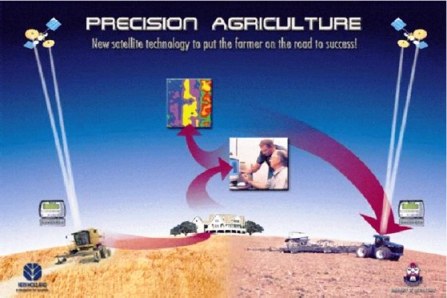
Precision farming integrates a number of technologies in order to optimize the benefits of mechanization, which is so essential for effective food production. By using satellite data to determine soil conditions and plant development, these technologies can lower the production cost by fine-tuning seeding, fertilizer, chemical and water use, and potentially increasing yield production and lowering costs — all benefiting the farmer. In turn, precision agriculture may have significant impacts far beyond the individual farm. Pollution is a common problem stemming from agricultural practices. Excess agricultural chemicals must go somewhere, and somewhere frequently means the common environment. Agricultural chemicals which may play a vital role in agricultural production, may well be considered pollutants once it has reached the common environment.

At its heart, the application of precision agriculture requires two spatial requirements:
(1) Concurrent knowledge of where the farm equipment is at any given time, and
(2) The value of one or more variables as a positioning function within a given field.

These variables requirements two sets of information; the “where” and the “what.”
Spatial precision needed for “where” varies from a few meters to a few centimetres, that can be satisfied by GPS, data processing systems.  In fact, using real-time GPS, it is possible to guide farming equipment to stay along a track of hundreds of meters long with only centimeter-scale deviations.

The second requirement, the “what,” is where remote sensing comes into the picture.

The electronics revolution of the last decades has spawned two technologies that will impact agriculture in future. These technologies are Geographic Information Systems (GIS) and Global Positioning System (GPS). Along with GIS and GPS there have appeared a wide range of sensors, monitors and controllers for agricultural equipment such as shaft monitors, pressure transducers and servo motors. Together they will enable farmers to use electronic guidance aids to direct equipment movements more accurately, provide precise positioning for all equipment actions and chemical applications and analyze all of that data in association with other sources of data (agronomic, climatic, etc). This will add up to a new and powerful management tool for the progressive farm manager.


Just as industrial manufacturing has changed radically over the last century, farming also need to change. The classic example of the farming being a way of life is long outdated. Farming has become a business which must be conducted on sound business practices. Costs, technology and economies of scale have forced most commercial farms around the world to change. And precision farming is beginning to play an ever increasing role in the quest for survival in the agricultural sector.

Precision farming should not be thought of as only yield mapping and variable rate fertilizer application and evaluated on only one or the other. Precision farming technologies will affect the entire production function (and by extension, the management function) of the farm. It is not only about an abstract measurement or characterization. It is about specific values at exact locations, assisting the farmer. 
   
Precision farming will result in an explosion in the amount of records available for farm management. Electronic sensors can collect a lot of data in a short period of time. Lots of computer storage space is needed to store all the data as well as the map graphics resulting from the data. There are currently a number of electronic controllers which will record data electronically.

It is necessary that fertilizer rates actually put down by the application equipment, is according to the requirements of the actual needs recorded by a prescription map. A lot of new data is generated every year (yields, weeds, etc). Farmers will want to keep track of the yearly data to study trends in fertility, yields, salinity and numerous other parameters. This means a large database is needed with the capability to archive, and retrieve data for future analyses.

Yield monitoring.
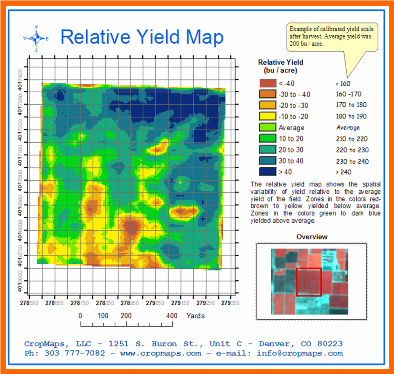
Instantaneous yield monitors are currently available from several manufacturers for all recent models of combines. It provide a crop yield by time or distance (e.g. every second or every few metres). It also track other data such as distance and tonnage per load, number of loads and fields. Yield mapping GPS receivers coupled with yield monitors provide spatial coordinates for the yield monitor data. This can be made into yield maps of each field. Variable rate fertilizer variable rate controllers are available for granular, liquid and gaseous fertilizer materials. Variable rates can either be manually controlled by the driver or automatically controlled by an on board computer  with an electronic prescription map.


Yield mapping during harvesting


Weed mapping
A farmer can map weeds while combining, seeding, spraying or field scouting by using a keypad or buttons hooked up to a GPS receiver and data-logger. These occurrences can then be mapped out on a computer and compared to yield maps, fertilizer maps and spray maps. Variable spraying by knowing weed locations from weed mapping spot control can be implemented. Controllers are available to electronically turn booms on and off, and alter the amount (and blend) of herbicide applied.

Topography and boundaries
Using high precision GPS a very accurate topographic map can be made of any field. This is useful when interpreting yield maps and weed maps as well as planning for grassed waterways and field divisions. Field boundaries, roads, yards, tree stands and wetlands can all be accurately mapped to aid in farm planning.


Topography mapping of a field

Salinity mapping GPS can be coupled to a salinity meter sled which is towed behind an ATV (or pickup) across fields affected by salinity. Salinity mapping is valuable in interpreting yield maps and weed maps as well as tracking the change in salinity over time.

Guidance systems
Several manufacturers are currently producing guidance systems using high precision DGPS that can accurately position a moving vehicle within a foot or less. These guidance systems may replace conventional equipment markers for spraying or seeding and may be a valuable field scouting tool.

The "layerd" approach.
Looking at a three dimensional analysis of a field


Several benefits are achieved from an automated method of capturing, storing and analyzing physical field records. Detailed analyses of the farm production management activities and results can be carried out. Farmers can look at the performance of new varieties by site specific area, measure the effect of different seeding dates or depths and show to their banker the actual yields obtained and the associated risk levels. It is imperative that trends and evaluations are also measured over longer time spans. Cropping strategies to control salinity for instance, may take several years to evaluate while herbicide control of an annual weed should only take one season.

Precision farming should be approached in stages, in order to ease into a more complex level of management. Precision farming does not "happen" as soon as one purchases a GPS unit or yield monitor. It occurs over time as a farmer adopts a new level of management intensity on the farm.

Implicit in this is an increased level of knowledge of the precision farming technologies such as GPS and GIS. What is perhaps more important for the success of precision farming, at least initially, is the increased knowledge that a farmer needs of his natural resources in the field. This includes a better understanding of soil types, hydrology, microclimates and aerial photography. A farmer should identify the variance of factors within the fields that effect crop yield before a yield map is acquired. A yield map should serve as verification data to quantify the consequences of the variation that exists in a field. Management strategies and prescription map development will likely rely on sources other than yield maps. The one important key source of data a farmer should not start precision farming without an aerial photograph.


Sattelite image of a production field

Precision farming makes farm planning both easier and more complex. There is much more map data to utilize in determining long term cropping plans, erosion controls, salinity controls and assessment of tillage systems. But as the amount of data grows, more work is needed to interpret the data and this increases the risk of misinterpretation. Farmers implementing precision farming will likely work closer with several professionals in the agricultural, electronics and agricultural equipment manufacturing sectors.

Precision farming is ideally suited for improved economic analyses. The variability of crop yield in a field allows for the accurate assessment of risk. For example, a farmer could verify that for 70 % of the time, 75 % of the maize grown in field "A" will yield X ton per hectare. By knowing the cost of inputs, farmers can also calculate return over cash costs for each square meter of the field. Certain parts of the field which always produce below the break even line can then be isolated for the development of a site-specific management plan.


Knowing your exact profit or loss per hectare

Precision farming allows the precise tracking and tuning of production.

Anyone interested in obtaining more information on precision farming is welcome to contact Stes de Necker at: stesdenecker@telkomsa.net
Fax to Email: 0866125254


Sources:
Tom Goddard, Conservation and Development Branch, Alberta Agriculture, Food and Rural Development
Barnes, E.M., and Baker, M.G. (2000). Multispectral data for mapping soil texture: possibilities and limitations. Am. Soc. Agricultural Engineers, 16, 731-41.
Bryson, R. J. 2000. Remote sensing in agriculture. 26-28 June 2000. Royal Agricultural College, Cirencester.


Find some more interesting articles on my blog.
Just click   http://stesdeneckers.blogspot.com